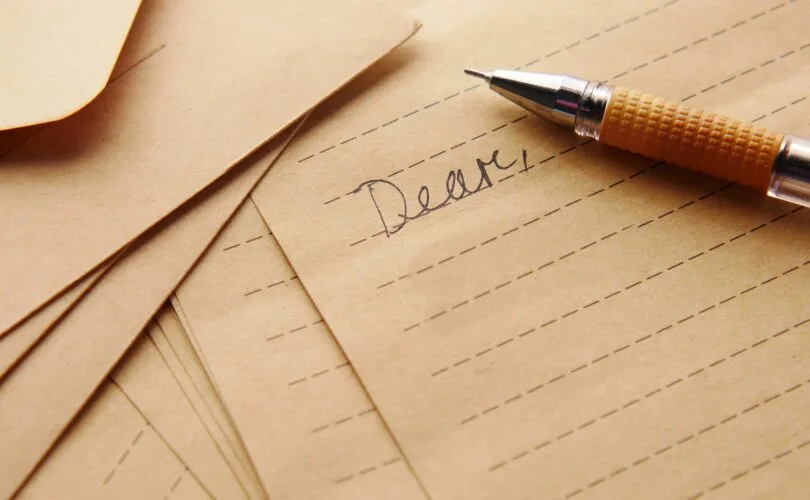
Grief does not always come with the right words at the right time. Sometimes the things we most need to say to someone we lost never got said out loud. One of the most accessible tools I recommend to clients at Rising Sails is something anyone can do at home, with no special training and no cost. It is simply this: writing letters to the deceased.
Why This Helps
When someone dies, we are often left holding thoughts and feelings that have nowhere to go. There was no chance to finish a conversation. There was something we wish we had said. There is anger, love, guilt, gratitude, or confusion that feels stuck inside us with no outlet.
Writing a letter gives those feelings a place to land. It is not about literary polish or getting the wording just right. It is about putting words to what is inside you and letting it exist outside your head for a moment. Many people find that once a feeling is written down, it loses some of its grip. The thought does not have to keep circling. It has been expressed.
This is sometimes called an unsent letter or a continuing bonds practice in grief work. Research on expressive writing consistently shows that putting difficult emotions into words, even privately, can ease the intensity of those emotions over time. You are not trying to fix the loss. You are giving yourself a way to carry it.
What You Might Write About
There is no correct format and no correct length. Some people write one paragraph. Some people write pages. A few starting points that clients have found useful:
- Something you never got to say
- An apology, whether it is yours to give or one you wish you had received
- An update on your life since they died
- A memory you want to hold onto
- Anger or frustration you have been carrying
- Simple gratitude for who they were to you
You do not need to organize these thoughts ahead of time. Start writing and let it go where it needs to go.
A Few Gentle Guidelines
Write by hand if you can. Something about the slower pace of handwriting tends to draw out more honest, unfiltered thoughts than typing does. That said, if typing is what gets you to actually do it, that is the better option.
Do not worry about grammar, spelling, or whether it makes sense to anyone else. This letter is not for anyone else. It is for you.
Give yourself permission to say the hard things. Anger, resentment, and unresolved conflict are part of many relationships. A letter is a safe place to be fully honest about complicated feelings, not just the tender ones.
You do not have to do anything with the letter once it is written. Some people keep it. Some people burn it or bury it as a symbolic release. Some people read it aloud at a grave or a meaningful place. Some people simply put it in a drawer and never look at it again. All of these are valid. The value is in the writing itself, not in what happens to the paper afterward.
When It Might Feel Too Hard to Do Alone
For some losses, especially sudden ones, complicated relationships, or deaths that came after a long illness, this kind of exercise can bring up more than expected. That is not a sign you are doing it wrong. It is a sign that your grief has layers worth exploring with support.
If you try this and find yourself flooded, stuck, or unable to finish even a single sentence, that is useful information. It may mean there is more here to work through with a grief therapist who can help you go at a pace that feels manageable.
We Are Here If You Need Support
At Rising Sails, I specialize in supporting people through anticipatory grief, chronic illness grief, and caregiver grief. Writing letters to someone who has died, or who you know you will lose, is one small tool among many I use in this work. If you are finding that grief is showing up in ways that feel too big to carry alone, I would be glad to talk with you.
I offer telehealth sessions across New Jersey, Delaware, Maryland, Virginia, South Carolina, and Florida. Reach out to learn more about individual therapy, grief support groups, or intensive sessions.