
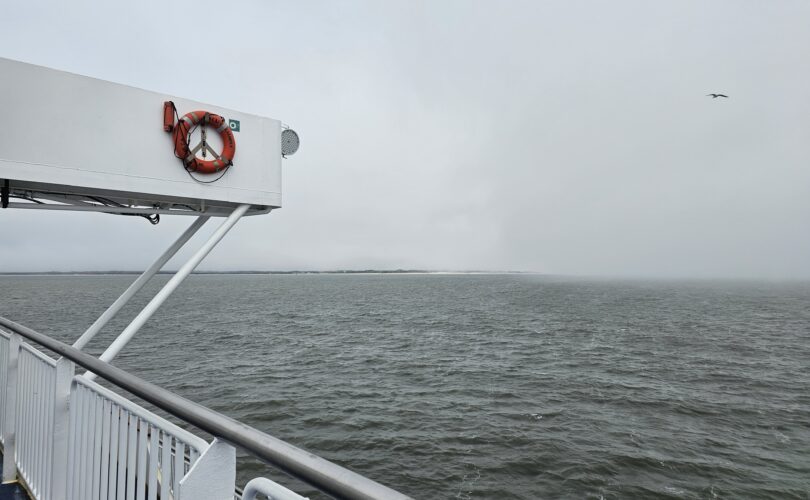
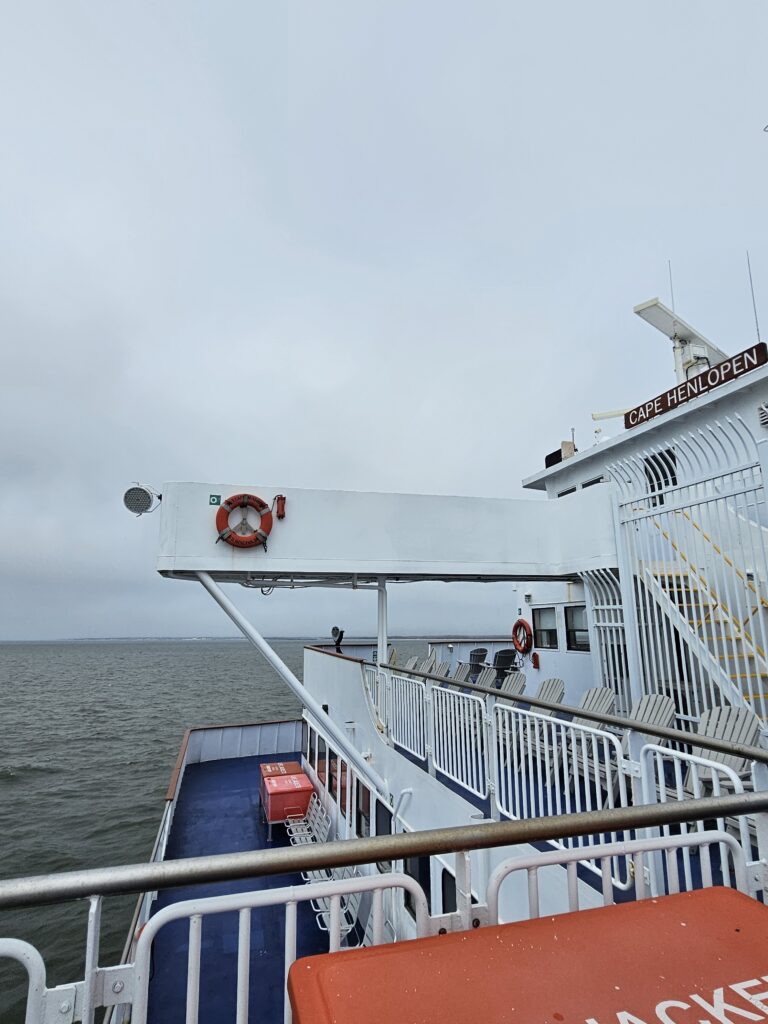
This past weekend, I took a ferry ride across the Delaware Bay. It turned into an Ocean of Grief.
It was overcast. The kind of gray sky that doesn’t feel threatening — just heavy. The water was surprisingly calm. Maybe the most calm I ever remember that ride being. I stood on the deck watching the wake trail behind us, thinking about my mom. We used to ride the ferry often. If we weren’t riding, we would park and just watch it.
I can’t help but think about her when I’m near water. We lived near the water growing up. We were always near water. So now, the water is her. It’s all those memories all at once.
Grief is like that. It just knows.
Standing there, cold wind off the bay, I kept coming back to something I’ve said to clients for years but haven’t always let myself feel: grief is like an ocean.
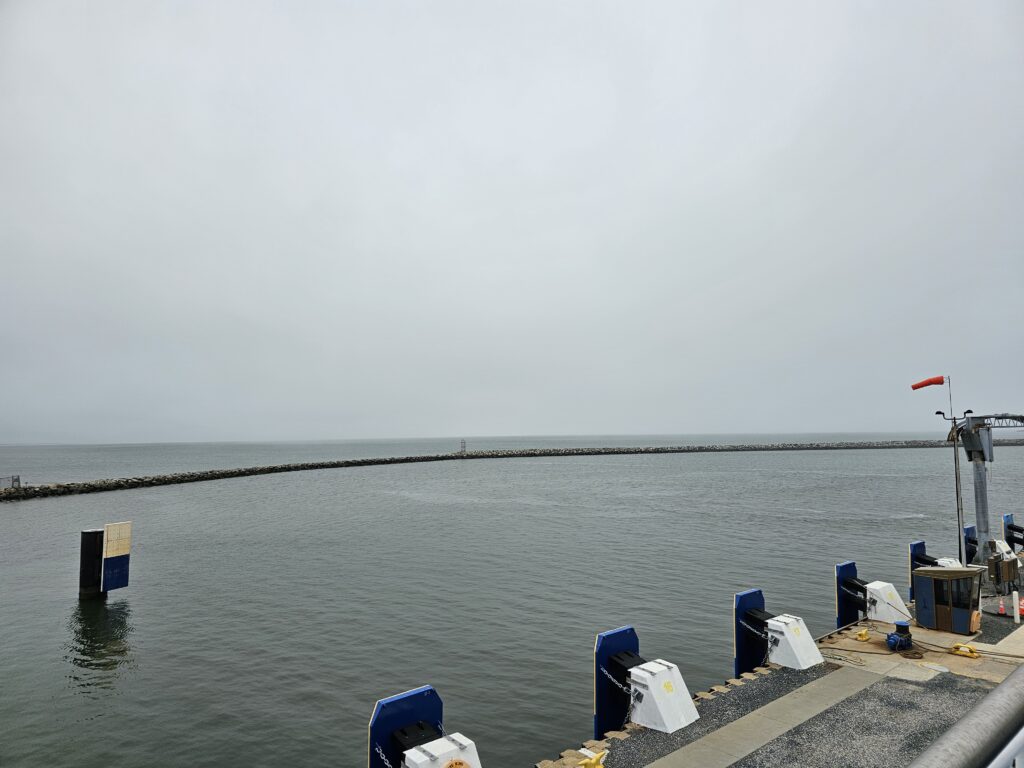
Grief Is Like an Ocean: It Doesn’t Stay the Same
The ocean is never the same. Some days there is stillness. It’s calming. The water feels good. Other days, the water is raging. Waves are crashing. They go over your head and pull you out to sea. Grief is like that. There are hurricanes, storms, sunny days, calm days, rip currents — you never really know, and none of it lasts long. It is always changing.
There are days it comes for you hard — out of nowhere, the way a wave knocks you sideways when you thought you were just standing in the surf. An ordinary Tuesday. A song. The smell of something in a grocery store. And suddenly you are not okay, and you weren’t warned, and you feel embarrassed somehow, like you should be further along by now.
And then there are stretches where it’s calm. Where you go whole days and feel mostly like yourself. Where you laugh at something and mean it. And sometimes even that feels wrong — like the calm is a betrayal, like you’ve forgotten something important.
The ocean doesn’t apologize for either one.
And your grief doesn’t have to, either.
Fighting an Ocean of Grief Doesn’t Work
I watched the water from that ferry deck and thought about how futile it would be to try to stop it. To stand in the bay and demand it be still. To refuse to get on the boat because you can’t control what it does.
We do this with grief. We try to manage it, schedule it, contain it to certain hours or certain days. I’ll fall apart on the anniversary. I’ll feel it at the funeral. But then I need to be done. We bargain with it like it’s going to cooperate.
It won’t.
And the more you fight the water, the more exhausted you get. Anyone who’s been caught in a rip current knows: you don’t swim against it. You go sideways. You let it carry you until you can move again.
Grief asks the same thing of you.
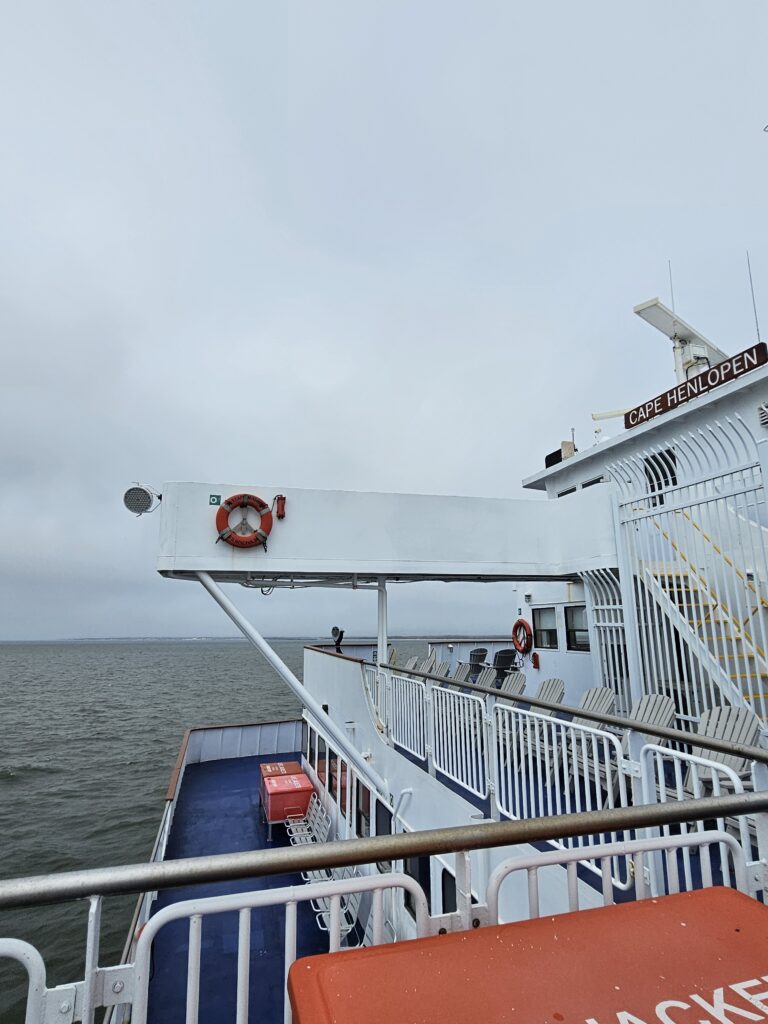
Going with the Ocean of Grief Is Not Giving Up
This is the part people get wrong.
When I say go with the ocean, I don’t mean collapse. I don’t mean stop functioning, stop caring for yourself, stop showing up for your life. I mean stop treating your grief like a problem to be solved on a timeline.
It isn’t.
My mom died and left a hole in the shape of her. That doesn’t close. What changes — slowly, unevenly, not on schedule — is how I carry it. How I learn to get back on the boat even when the weather isn’t great. How I stand at the rail and let myself miss her and let that be enough for that moment.
Going with the ocean means trusting that the storm will pass this time, even if it comes back again. It means letting yourself float when you’re tired. It means not demanding that the water be something it isn’t, just because that would be more convenient.
You Don’t Have to Navigate The Ocean of Grief Alone
I became a grief therapist because I’ve been in the water. Not just professionally — personally. I know what it’s like to stand on a ferry deck in April and feel the weight of someone’s absence like a change in air pressure.
And I know that sometimes the bravest thing you can do is say: I need someone to help me understand what I’m swimming through.
That’s what grief therapy is for. Not to drain the ocean. Not to make the grief stop. But to help you learn how to be in it — to ride the swells without drowning, to find your way back to the surface when a wave takes you under, to eventually trust that the calm stretches are real, and that you are allowed to rest in them.
If you’re in the thick of it right now — if the water feels rough and you’re not sure how to keep your head up — I’d be honored to be in that boat with you.
Book a free 15-minute consultation
Sherri Webster, LCSW-C, C-SWHC is the founder of Rising Sails, a telehealth and in-person therapy practice based in Dover, Delaware. She specializes in grief therapy, depression, and anxiety with older teens and adults. Rising Sails serves clients in Delaware, New Jersey, Maryland, Virginia, Florida, and South Carolina.