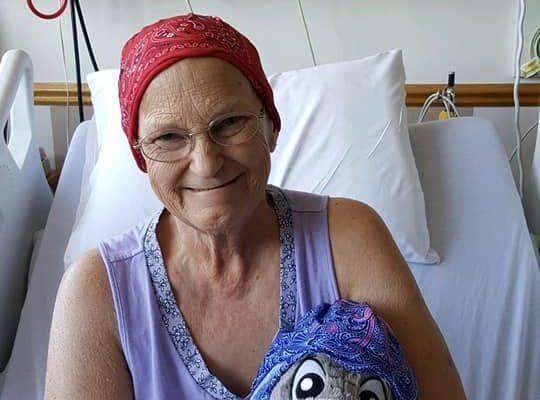

I visited someone I love recently. The anticipatory grief visited too.
I noticed his collarbone first. In fact, he pointed it out. The way it’s become hollow. He asked me to grab it…to put my hand in the hollow space. He also pointed out his bicep. Asked me to feel it. It’s a fraction of the size I remember from childhood. I also noticed the way his clothes hang differently now. He’s losing muscle — slowly, visibly — and there’s nothing I can do about it. I noticed how slow he is moving.
But I also noticed, he’s still smoking. Maybe 2-3 packs a day. He had a cigarette lit every time I see him. Still eating fast food. Every single meal. Still making choices that I know are making things worse.
And I sat there, loving him, watching him, and feeling something I wasn’t fully prepared for.
Not just grief. Frustration.
When Love and Anger Show Up at the Same Time
Nobody really prepares you for that part.
We talk about anticipatory grief as sadness — mourning a loss before it happens, bracing for what’s coming. And it is that. But sometimes it’s also this: watching someone you love make choices that seem to be accelerating the very thing you’re terrified of. And feeling completely powerless to stop it.
You can’t force someone to eat better. You can’t take the cigarettes away. You can’t make someone take care of themselves the way you need them to.
So you just watch. And love them. And grieve. And sometimes — if you’re being honest — you’re angry.
And then you feel guilty for being angry, because they’re the one who is sick, and who are you to feel anything other than grateful for the time you still have?
What This Actually Is
This is anticipatory grief — and the frustration, the anger, the guilt about the anger — all of it is part of it.
Anticipatory grief is the grief that begins before the loss. It shows up when someone you love is declining, when a diagnosis has changed everything, when you can see what’s coming even if nobody will say it out loud yet.
It doesn’t follow the rules we’ve been taught about grief. There’s no clear moment when it starts. No funeral. No casseroles from neighbors. Just an ordinary Tuesday where you notice a hollow collarbone and drive home with a weight in your chest that you don’t have words for yet.
And because the loss hasn’t happened yet, most people around you don’t fully see it. You’re still functioning. Still showing up. Still being what everyone else needs.
But you’re already grieving. Already wondering — what if? What then?
The Guilt Makes It Heavier
Here’s what I hear often — from clients, and what I know from my own experience:
The frustration doesn’t feel allowed.
If someone is declining, if someone is sick, if someone is losing ground — you’re supposed to be patient. Compassionate. Present. And you are those things. But you’re also human. And watching someone you love make choices that are hurting them, that are hurting you, that are stealing time — that produces a very real and very legitimate anger.
It doesn’t mean you love them less.
It means you love them, and this is hard, and grief is not a single clean emotion.
What Helps
Naming it is the first thing. Anticipatory grief with frustration woven through it is still grief — and it deserves the same space and care as any other kind.
A few things that can help:
Finding one person who can hold this with you without trying to fix it or reframe it. Someone who won’t say “at least you still have time” or “you should be grateful.”
Giving yourself permission to feel more than one thing at once. Grief and frustration. Love and anger. Fear and exhaustion. None of these cancel each other out.
Recognizing that you are already in it. You don’t have to wait for the loss to give yourself permission to grieve — or to get support.
You Don’t Have to Wait
If any of this feels familiar — if you’re watching someone decline and carrying more than you can name — you don’t have to keep doing that alone.
This is exactly the kind of grief I work with. The kind that’s happening right now, before the loss, in the in-between space where life keeps moving and you’re quietly falling apart.
If you’re ready to talk, I offer a free consultation. It’s just a conversation — and it costs you nothing.
Sherri Webster, LCSW, C-SWHC is a licensed clinical social worker specializing in anticipatory grief and life-altering diagnoses. She works with adults in person in Dover, DE and via telehealth across Delaware, New Jersey, Maryland, Virginia, Florida, and South Carolina.