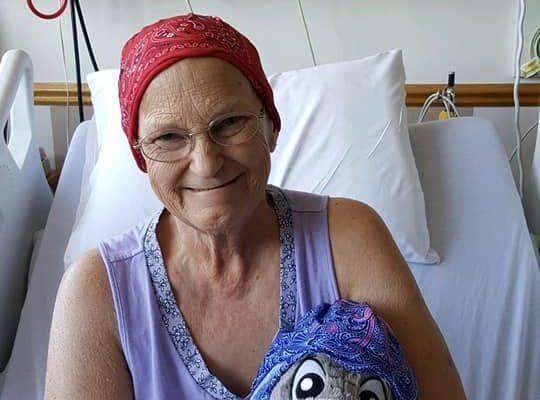

What you’re feeling has a name: anticipatory grief. And it’s real, even when the people around you can’t see it.
You told someone you love about the diagnosis. Or about the fear. Or about the phone call that changed everything.
And they said something like:
“At least they caught it early.” “You have to stay positive.” “I know someone who had that — they’re totally fine now.” “Everything happens for a reason.” “You’re so strong. You’ll get through this.”
And something in you went quiet.
Not because they don’t love you. You know they do. Not because you think they’re a bad person. You don’t. But because in that moment, what you needed was for someone to sit in the hard thing with you — and instead, they handed you a way out of it.
They meant well. It still hurt.
Why Anticipatory Grief Goes Unseen
Here’s something that might reframe it slightly, not to excuse it, but to help you stop internalizing it as a verdict on your pain:
Most people don’t know how to be with grief. Especially anticipatory grief — the kind that lives in the space between the diagnosis and whatever comes next. There’s no casket. No obituary. Nothing to point to. From the outside, life looks like it’s still going.
So when you share something that frightening, the people who love you often do the only thing they know how to do: they try to fix it. They reach for hope, for silver linings, for stories about someone who made it through. Not because your pain isn’t real to them. Because it’s so real that they can’t hold it without doing something about it.
The problem is that fixing isn’t witnessing. And right now, you need to be witnessed.
What Happens When Anticipatory Grief Goes Unwitnessed
When the people closest to you consistently minimize what you’re going through, something starts to shift. You learn to pre-edit yourself. You stop bringing the hard things. You get very good at saying “I’m fine” in a tone that ends conversations.
And then you carry it alone — which was never the plan.
This is one of the most painful and least-talked-about parts of grieving a diagnosis, whether you’re the one who received it or the one watching someone you love move through it. The isolation isn’t always about being physically alone. Sometimes it’s about sitting at a full table and feeling completely unseen.
That matters. It’s worth naming. And it’s worth getting support for — not because your family failed you, but because you deserve a place where you don’t have to shrink your experience to make someone else comfortable.
What You Can Say (If You Want To)
You don’t owe anyone an education. But if there’s a relationship you want to preserve and deepen, sometimes it helps to give people a different script.
A few things that can open a door:
- “I know you want to help me feel better. Right now what helps most is just feeling heard.”
- “I’m not looking for a solution — I just need someone to sit with me in this for a minute.”
- “When you say it could be worse, I know you mean well, but it makes me feel like I can’t talk to you about how scared I am.”
Most people, when they understand what you actually need, will try to give it to you. Not everyone. But most.
And If You’re the Caregiver Reading This
This one’s for you too.
Because caregivers hear it differently: “You’re doing such a good job.” “You’re so strong.” “I don’t know how you do it.”
Which sounds like support. But if nobody is asking how you’re doing — really doing — you end up wearing a costume you never asked for. Like the role of Strong One has been assigned to you, and now there’s no room to fall apart.
You’re allowed to grieve too. You’re allowed to be terrified and exhausted and furious and heartbroken, all at the same time. Caregiving is its own kind of loss, and it deserves its own kind of space.
You Don’t Have to Minimize Yourself to Match Them
The people in your life who reach for silver linings aren’t wrong to love you. But their discomfort with your grief is not a reason to make yourself smaller.
Your fear is real. Your grief is real. The exhaustion and the uncertainty and the loneliness of carrying something this heavy — you deserve someone who can hold all of it without flinching.
That’s what therapy is for. Not because you’re broken. Because you’re human, and this is hard, and you shouldn’t have to do it alone.
If you’re navigating grief around a diagnosis — your own or someone you love — I work with adults across New Jersey, Delaware, Maryland, Virginia, South Carolina, Florida. Telehealth makes it possible to meet you wherever you are. Reach out here.