Anticipatory grief shows up in the smallest moments — long before a loss actually happens. This is one of mine.
I walked into my mom’s hospital room and immediately noticed her bald head.
No one warned me. There was no gentle heads-up in the hallway, no “before you go in, just so you’re prepared.” I just opened the door and there she was — bald, smaller somehow, looking deflated in a way I didn’t have words for yet. Like something essential had been let out of her.
My dad and I sat with her for a few hours. We talked about nothing important, the way you do when the important things are too big to say out loud. Then I told her I was going to get a coffee.
I didn’t get a coffee.
I went down to the hospital gift shop instead. It was the kind of place with overpriced magazines, stuffed animals, and a selection of just four or five headscarves — not pretty ones, not the ones I’d eventually find for her, but something. I bought two.
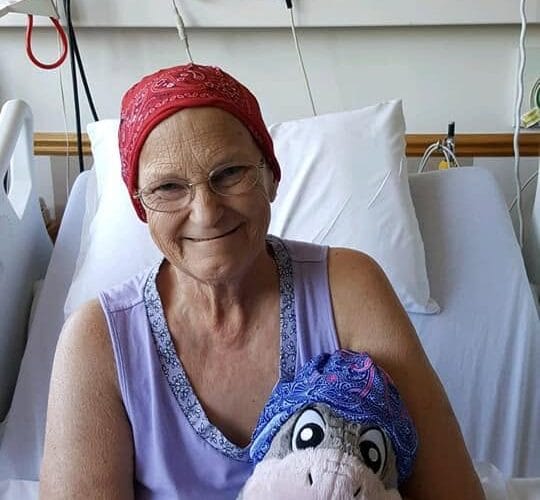
When I got back to her room, she asked where my coffee was. I had to admit to my mom that I’d lied to her, which never feels good. She saw the bag, so I pulled out the red one and gave it to her. She wrapped it around her head and looked at herself through the camera on her phone. A mostly real smile. Not the brave one she’d been giving everyone all week. The deflated look was gone. It wasn’t a full real smile, but it wasn’t a fake one either.
The second scarf, a purple one, went on her stuffed Eeyore — the one that had been sitting on her hospital bed or in her lap since she was admitted, slumping the same way she was. I tied it around his head and handed him to her, and she hugged him. They looked the same. Not just the scarves. The whole demeanor. Two slumped, deflated things, suddenly sitting a little straighter.
It’s such a small thing to remember. A gift shop, two cheap headscarves, a stuffed animal. But it’s one of the moments I come back to most when I think about my mom’s illness — because it was the first time I understood that grief isn’t only about the big losses. It’s about watching the person you love disappear in small, specific ways, and looking for any small, specific thing you can do about it.
I couldn’t fix what was happening to her. I couldn’t undo the diagnosis or the treatment or the fact that she’d lost her hair before she was ready to. But I could find her a headscarf. I could make sure she wasn’t the only deflated thing in that room.
If you’re in the middle of caring for someone you love through illness — watching them change in ways no one prepared you for, grieving pieces of them while they’re still here — you’re not alone in that, and you’re not wrong to feel the weight of it. This is what’s known as anticipatory grief, and it deserves real support, not just casseroles and “let me know if you need anything.”
If this resonates with you, I’d be honored to help you carry it.
Sherri Webster, LCSW, C-SWHC specializes in grief, chronic illness, and caregiver support. [Schedule a consultation] to talk about what you’re carrying.