
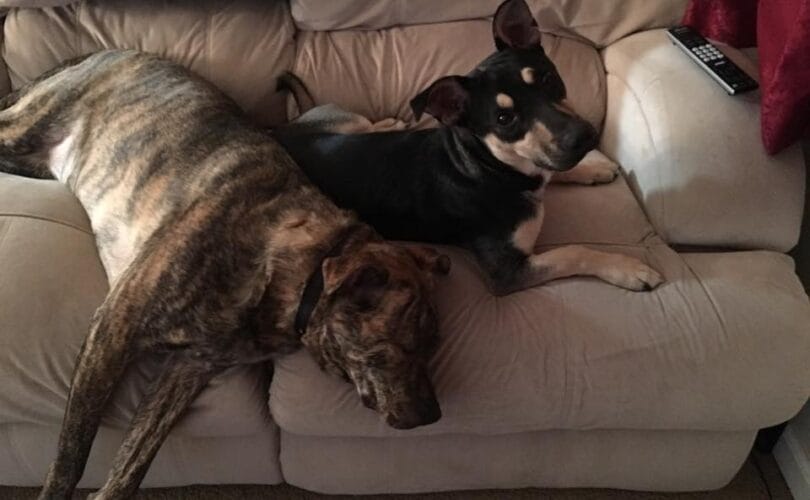
Pet loss grief is one of the most real — and most dismissed — kinds of grief there is. If you’ve lost a pet, or if you’re watching one decline and already feel the weight of what’s coming — you’re not alone in this.
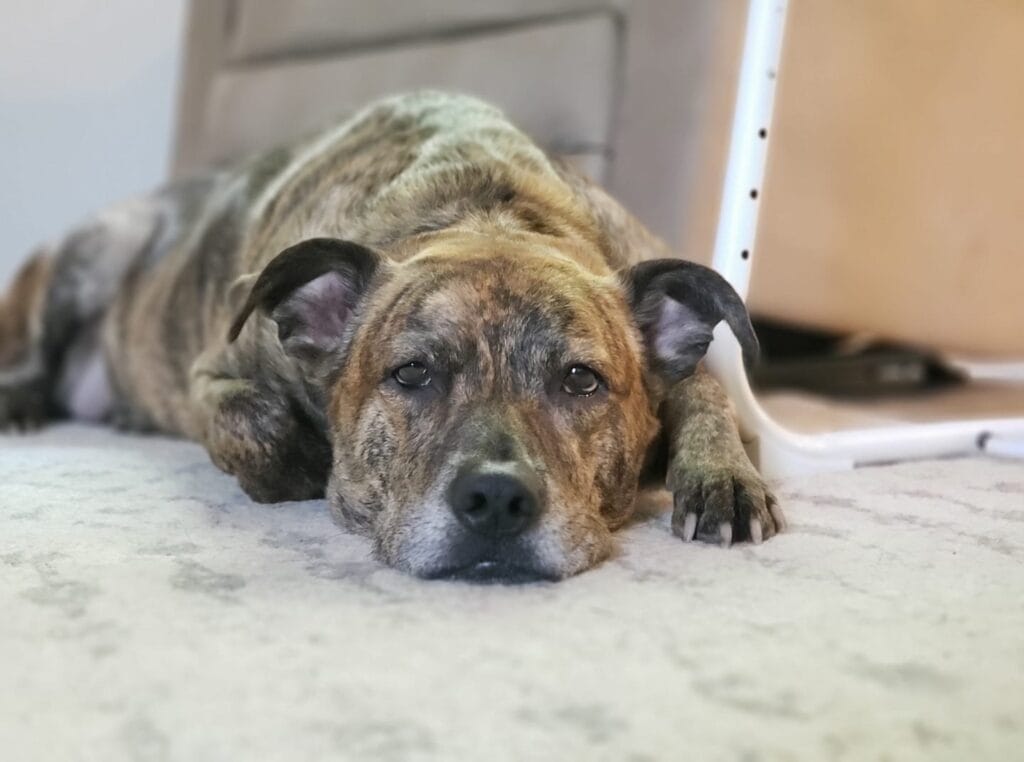
This is Batman.
He was a brindle boxer mix — big personality, bigger heart. He also had megaesophagus, which meant his last year of life looked nothing like the life we’d planned for him. Daily vomiting. Weight loss that I watched happen and couldn’t stop, no matter what we tried. A lot of days that were just hard, quietly, in the background of everything else.
We lost him on August 24, 2025.
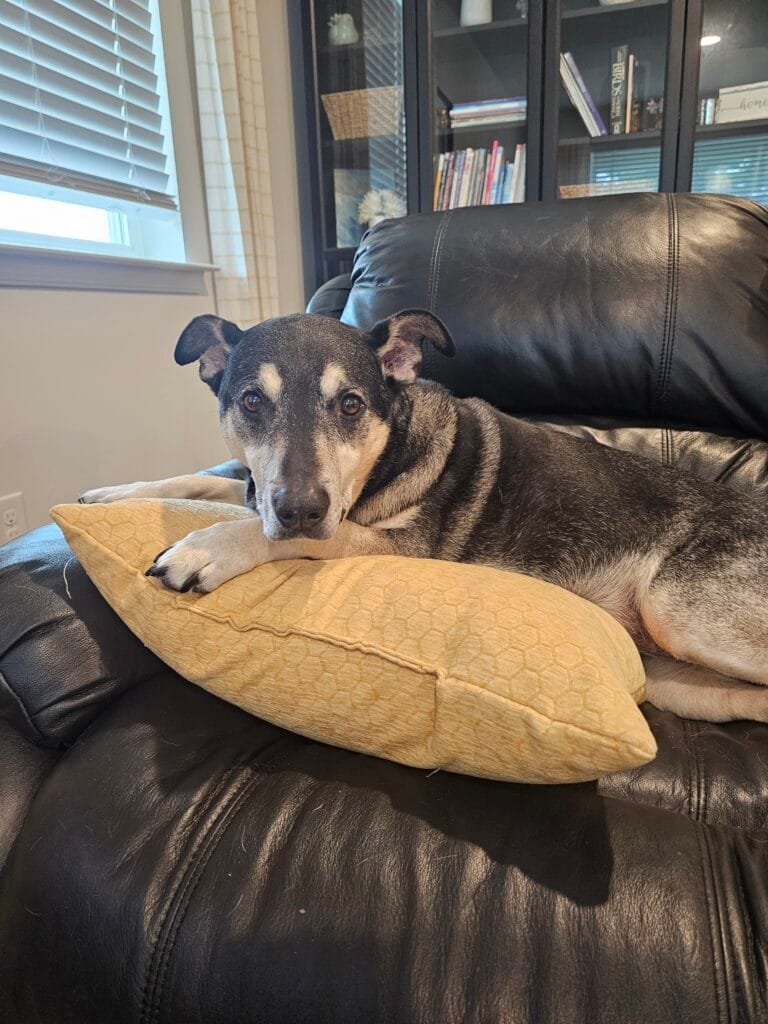
This is Rollo.
He’s an Australian Kelpie and Corgi mix, which means he has approximately three times more energy and opinions than any one dog should. He’s been mine in the way that dogs just are — fully, without condition, without asking for anything back but your presence.
A few months ago, he tore his ACL. And then, during that vet consultation, they found a mass in his anal gland the size of a golf ball. It had already spread to his lymph nodes.
We have, probably, just a few weeks left, a couple months if we are lucky.
I’m telling you this because I want you to understand something before we get to the clinical part: I’m not writing about pet grief from a distance. I’m in it. Right now. While I’m writing this.
“It Was Just a Dog.”
There’s a term in grief work: disenfranchised grief. It describes grief that isn’t socially recognized or validated — loss that others minimize, dismiss, or simply don’t know how to hold.
Pet loss is one of the most common forms of disenfranchised grief there is.
You’ve probably heard it. Maybe you’ve even said it to yourself, before you really knew:
“It was just a dog.”
“You can get another one.”
“At least it wasn’t a person.”
These phrases aren’t said out of cruelty, usually. They’re said out of discomfort — other people’s discomfort with grief they don’t know how to witness. But what they leave behind is a person who is genuinely devastated, trying to grieve quietly, feeling somehow embarrassed about how much it hurts.
If that’s you, I want you to hear this: there is nothing small about this loss.
The bond we form with animals is real, neurologically and emotionally. Research has consistently shown that the grief of losing a pet can rival the grief of losing a human relationship — especially when that animal was a primary source of companionship, comfort, or routine. For people who live alone, for people with chronic illness, for people who have already lost a lot — a pet can be the most stable, consistent relationship in their life.
Losing that is not a minor loss. It is a major one.
When You’re Already Grieving Someone Who Is Still Here
What I’m living with Rollo right now has a name too: anticipatory grief.
Anticipatory grief is the grief that begins before the loss. It’s the grief of watching someone you love decline. Of knowing what’s coming and not being able to stop it. Of loving as hard as you can while simultaneously starting to say goodbye.
It’s exhausting in a way that’s hard to explain, because on the outside, everything still looks normal. Rollo is still here. He still wags his tail. He still wants his morning walk and evening cuddles. And I still have to answer emails and see clients and make dinner.
But inside, I’m grieving. Every single day.
Anticipatory grief in pet loss is particularly isolating because it often goes completely unacknowledged. People ask how Rollo is doing. They don’t often ask how I’m doing. And there’s an awkward social math where expressing how devastated you are about something that hasn’t happened yet feels like oversharing, or dramatizing, or somehow jumping ahead to a grief you’re not “allowed” to have yet.
You are allowed to have it. You are already in it. It counts.
What Pet Loss Grief Actually Looks Like
Pet grief doesn’t follow the stages you may have learned about. It doesn’t move in a straight line. It can show up as:
- Difficulty sleeping, or sleeping too much
- Loss of appetite or changes in eating
- Crying at unexpected moments — or not being able to cry at all
- Profound quiet in your home that feels almost physical
- Guilt about decisions made at the end of life
- Searching behavior — looking for them in their usual spots
- Anniversary grief that returns months or years later
And when you’ve had a long illness leading up to the loss — like with Batman, like what I’m living now with Rollo — there’s often a complicated layer of relief woven into the grief. Relief that they are no longer suffering. And then guilt about the relief. And then grief about the guilt.
It doesn’t have to make sense. Grief rarely does.
When You’re Ready for Support
I work with adults who are navigating grief — including pet loss, anticipatory grief, caregiver grief, and chronic illness grief. I know this territory because I’ve lived it, and because I’ve sat with hundreds of people who have too.
You don’t have to get through this alone.
Therapy isn’t about talking yourself out of grief. It’s about having somewhere to put it that isn’t your kitchen floor at 2am.
Rising Sails offers telehealth grief therapy across Delaware, New Jersey, Maryland, Virginia, Florida, and South Carolina — as well as in-person sessions in Dover, Delaware.
If you’re ready, I’d be honored to sit with you in this.
Sherri Webster, LCSW, C-SWHC is a licensed clinical social worker and grief specialist. She is the founder of Rising Sails, a private practice specializing in anticipatory grief, chronic illness grief, and caregiver grief.